

Description
West Indian Walnut, or Nogal, is a rare nut-bearing timber tree native to the Caribbean, with a range confined to small areas of mountain forests on the islands of Cuba, Hispaniola, and Puerto Rico.
It grows at a moderate rate and is typically a medium-sized tree under forest conditions, 15 to 20 m (50 to 65 ft) in height and with a trunk diameter of 60 cm (2 ft), though large specimens up to 30 m (98 ft) tall have been reported.
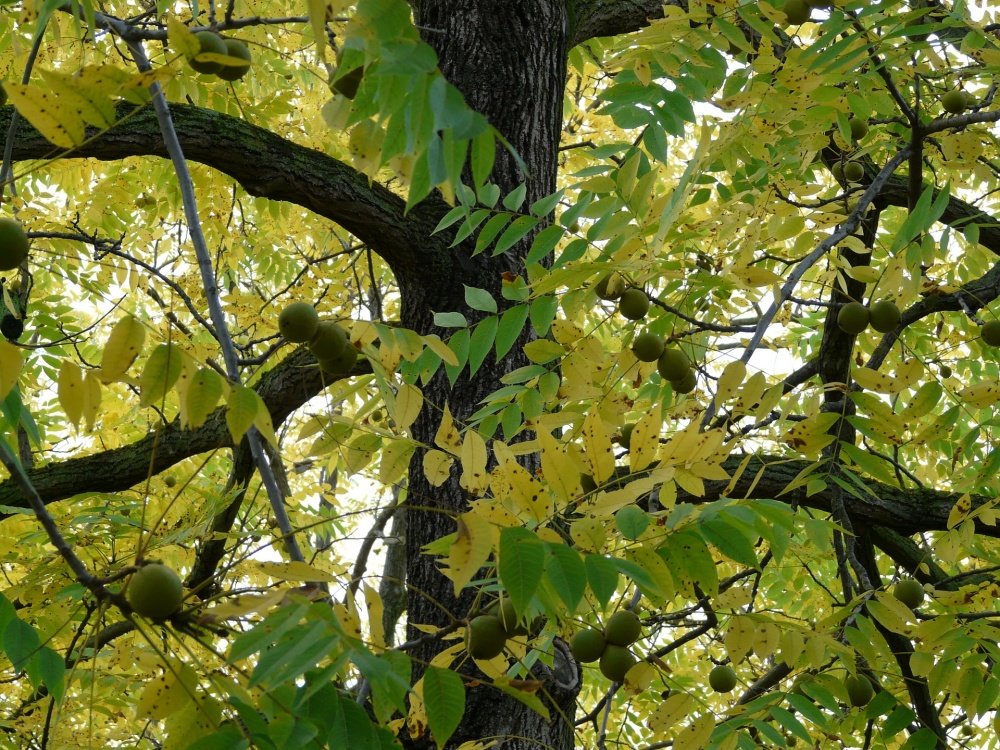
The trunk is usually straight, sometimes with small buttresses at the base of large trees, and supports a densely branched, irregular-shaped crown. The bark is brown and becomes fissured with age.
Leaves are large, up to 50 cm (20 in) long and feathery, comprised of 16 to 20 green lance-shaped leaflets, each finely toothed on the margins and arranged in pairs along the length. They remain on the tree in all seasons.
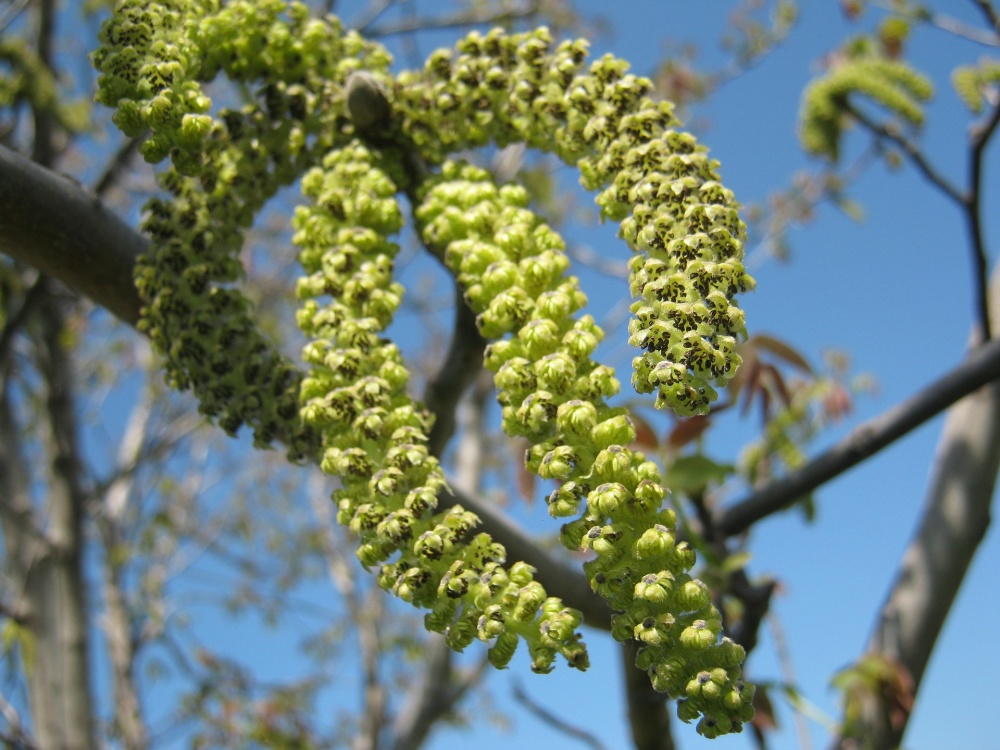
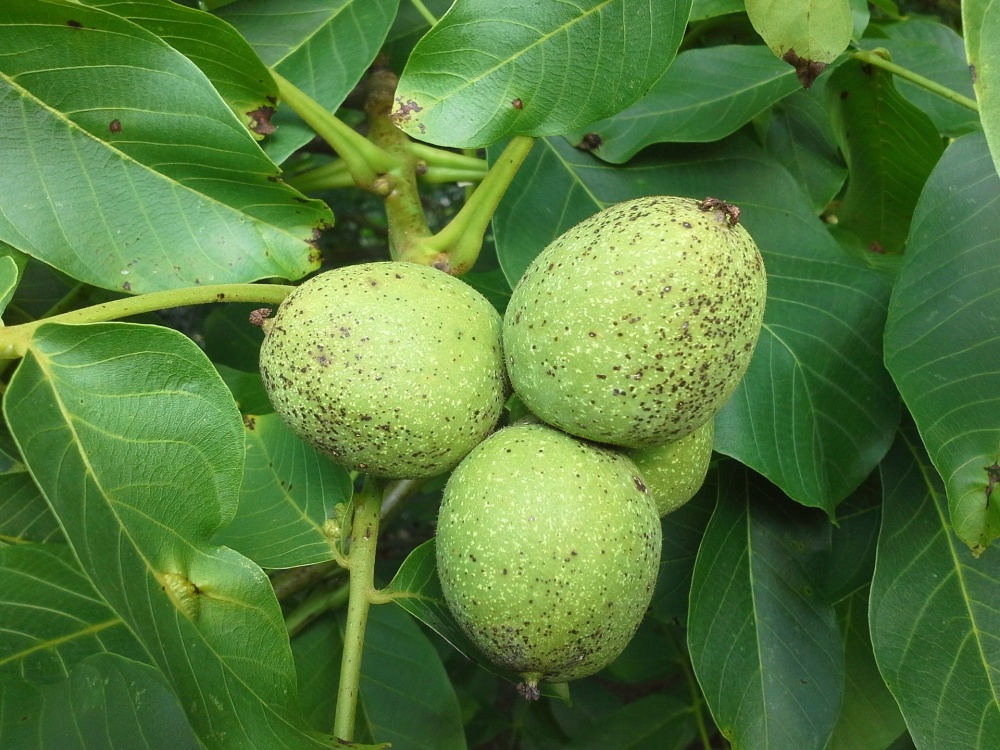
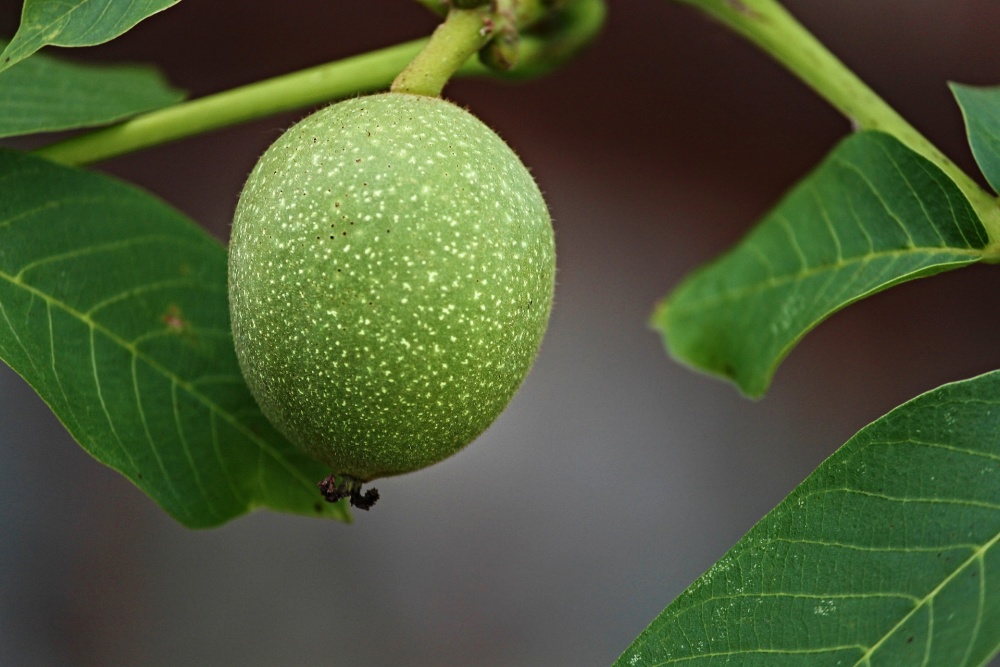
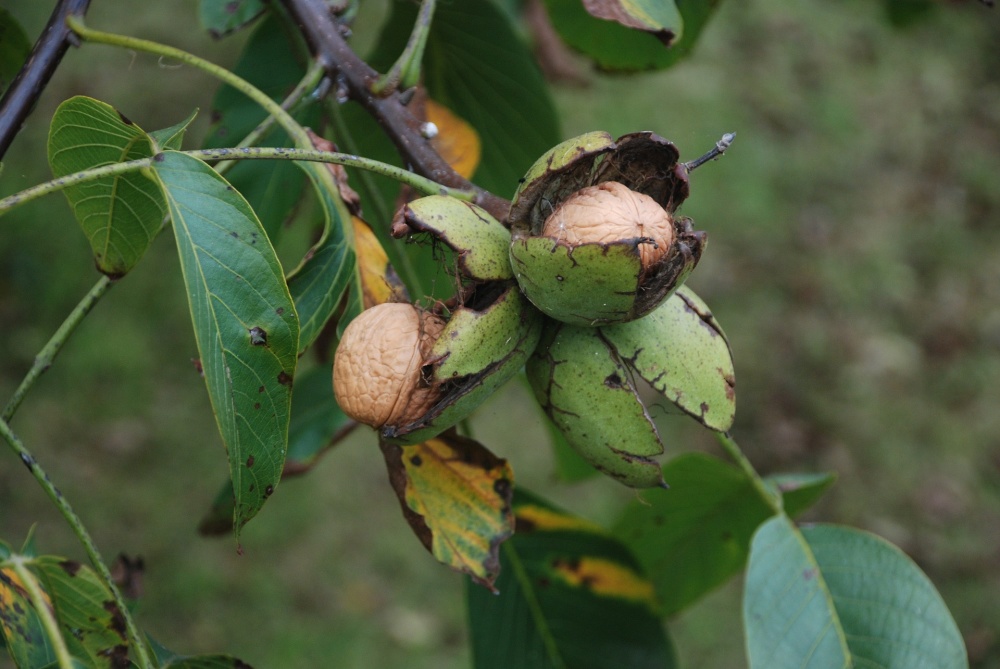
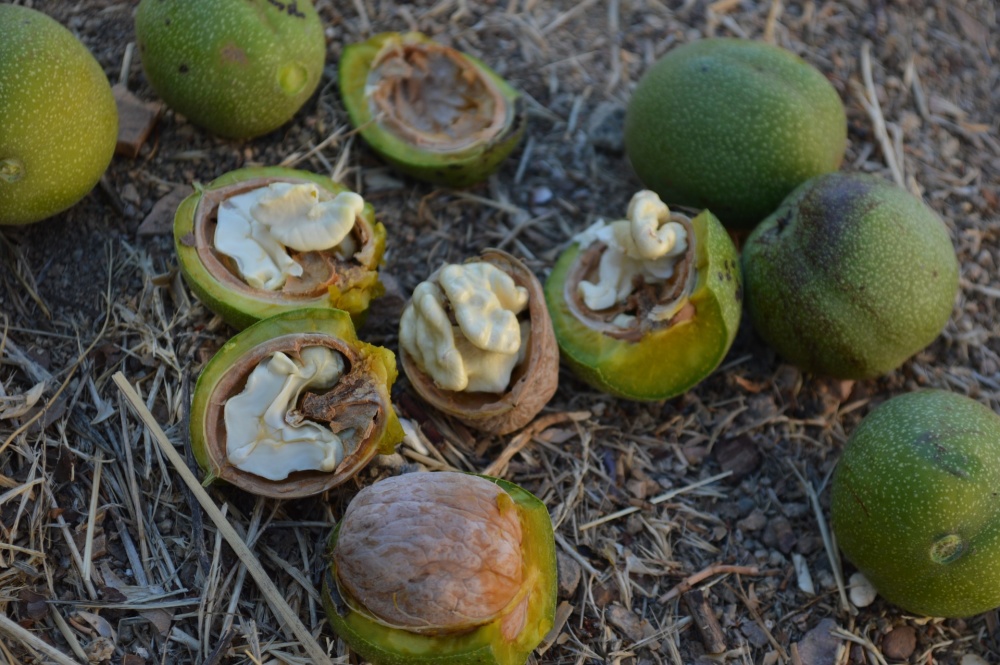
Flowers are small, greenish and female or male, borne in separate, tail-like clusters (called catkins) on the same tree. They bloom in spring and are followed by small, green, egg-shaped fruit, about 4 to 5 cm (1.6 to 2 in) long. These have a thick rind covering a wrinkled brown nut with an oily kernel inside. They ripen in summer, around three months after fruit set, then fall to the ground where the rind blackens.
Edible uses
Edible nut - The nut is edible and comparable to other walnuts in shape, size and taste, though with a somewhat harder shell. As with cultivated walnuts, the fruit are collected after falling to the ground and heaped into a pile to encourage the rind to rot and soften, making the nut easy to remove. The nuts are then washed and air-dried under shade. After drying, the hard shell is cracked open, and the kernel is eaten like other walnuts.
Material uses
Hardwood - The heartwood is grey- or chestnut-brown with purple streaks. It is medium to heavy, depending on the tree's age and the growing conditions, with densities ranging from 400 to 800 kgs per cubic meter (25 to 50 lbs per cubic ft).
Furniture and cabinets - The wood is similar in quality and appearance to better-known walnut species prized for their timber, including English Walnut (Juglans regia) and American Walnut (Juglans nigra), from temperate, cold-climate areas of Asia, Europe and North America, whose wood is mainly used for fine furniture, decorative veneer, and carvings.
Natural dye - The leaves and rind covering the nut of Juglans species have long been used to dye fabric in shades of beige, brown, and yellow without a mordant for colourfastness, thanks to the dye's high tannic acid content. Dyers sometimes add an iron modifier to the dye liquor to achieve richer, darker shades of brown.
Environmental uses
Species conservation - The International Union for Conservation of Nature and Natural Resources (IUCN) lists West Indian Walnut as vulnerable, highlighting its conservation needs. In Cuba, conservation efforts include encouraging coffee (Coffea arabica) farmers to plant it to shade their crops.
Health uses
Omega-3 fatty acid - Walnuts are rich in edible oils, most of which are polyunsaturated fatty acids with good amounts of linolenic acid, essential in human diets and known for helping lower blood cholesterol.
Climate
West Indian Walnut grows naturally and develops best in moderately humid subtropical and tropical mid-elevation climates, generally frost-free areas with annual lows of 12 to 19°C, annual highs of 25 to 31°C, annual rainfall of 1000 to 2500 mm, and a dry season of 4 months or less.
Growing
New plants are usually started from seed, at least half of which will germinate within two to three months of sowing. Plants are also grown from root suckers taken from mature trees.
Trees perform best on deep, rich, free-draining clay and loam soils that are moderately acidic to slightly alkaline, generally with a pH of 5.5 to 7.5, and on sites with full to partial sun exposure.
Problem features
Seed dispersal relies on large animals, flowing water or sloping ground to carry the relatively large fruit to new sites away from the parent tree. Although it can send up suckers from the roots, these have a low survival rate in shade. No records of escape appear to exist, which is not surprising given its rarity.
Where it grows
References
Books
-
Adams, C. D. 1972, Flowering plants of Jamaica, University of the West Indies, Mona, Greater Kingston
-
Chudnoff, M. 1984, Tropical timbers of the world, Forest Service, U.S. Department of Agriculture (USDA), Washington, D.C.
-
Dean, J. 2010, Wild Color : the complete guide to making and using natural dyes (Revised and updated edition), Watson-Guptill Publishing, New York
-
Francis, J. K. 1998, Tree species for planting in forest, rural, and urban areas of Puerto Rico, U.S. Department of Agriculture, Forest Service, International Institute of Tropical Forestry, Río Piedras, Puerto Rico
-
Francis, J. K. et al. 2000, Silvics of Native and Exotic Trees of Puerto Rico and the Caribbean Islands, Technical Report IITF-15, USDA Forest Service, Rio Piedras, Puerto Rico
-
Jelks, Mary 1986, Allergy plants : that cause sneezing and wheezing, 1st ed., World-Wide Publications, Tampa, Florida
-
Little, E. L. 1974, Trees of Puerto Rico and the Virgin Islands, Vol. 2, United States Department of Agriculture (USDA), Washington D.C.
-
Martin, F. M., et al. 1987, Perennial edible fruits of the tropics : an inventory, U.S. Dept. of Agriculture (USDA), Agricultural Research Service, U.S. Government Printing Office (GPO), Washington, D.C.
-
Record, S. J. & Hess, R. W., 1972, Timbers of the New World, Yale University Press, New Haven, Connecticut & Arno Press, New York